
Teatro Municipal de Lima: Rebirth in the City of Kings
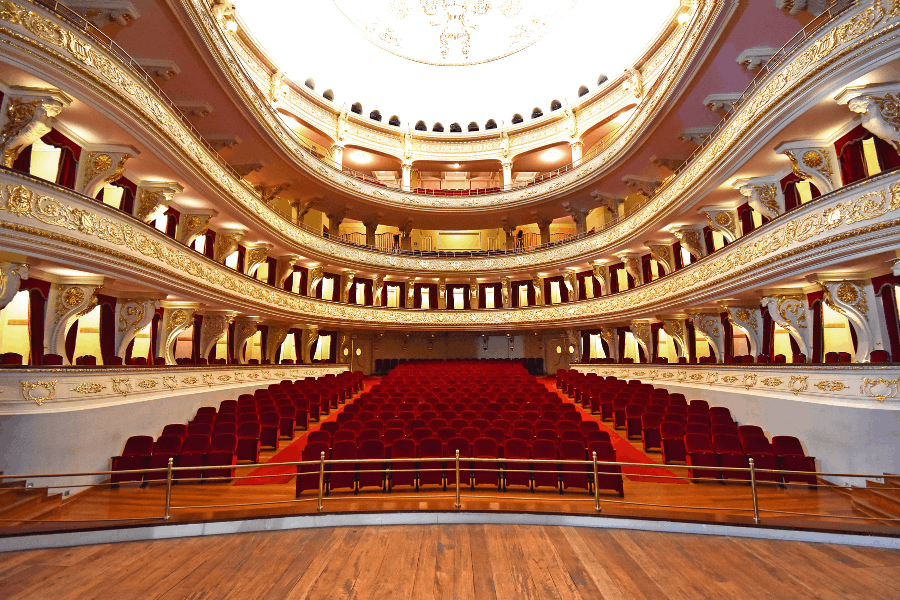
Opened in 1920 as the Teatro Forero and acquired by the Municipalidad Metropolitana de Lima in 1929, the Teatro Municipal de Lima is one of Peru’s leading cultural institutions and a symbol of the capital’s historic centre. Having survived a devastating fire in 1998, the opera house has been transformed through reconstruction and modernisation into a home for resident artistic ensembles and a meeting point for some of the most celebrated voices on the international circuit.
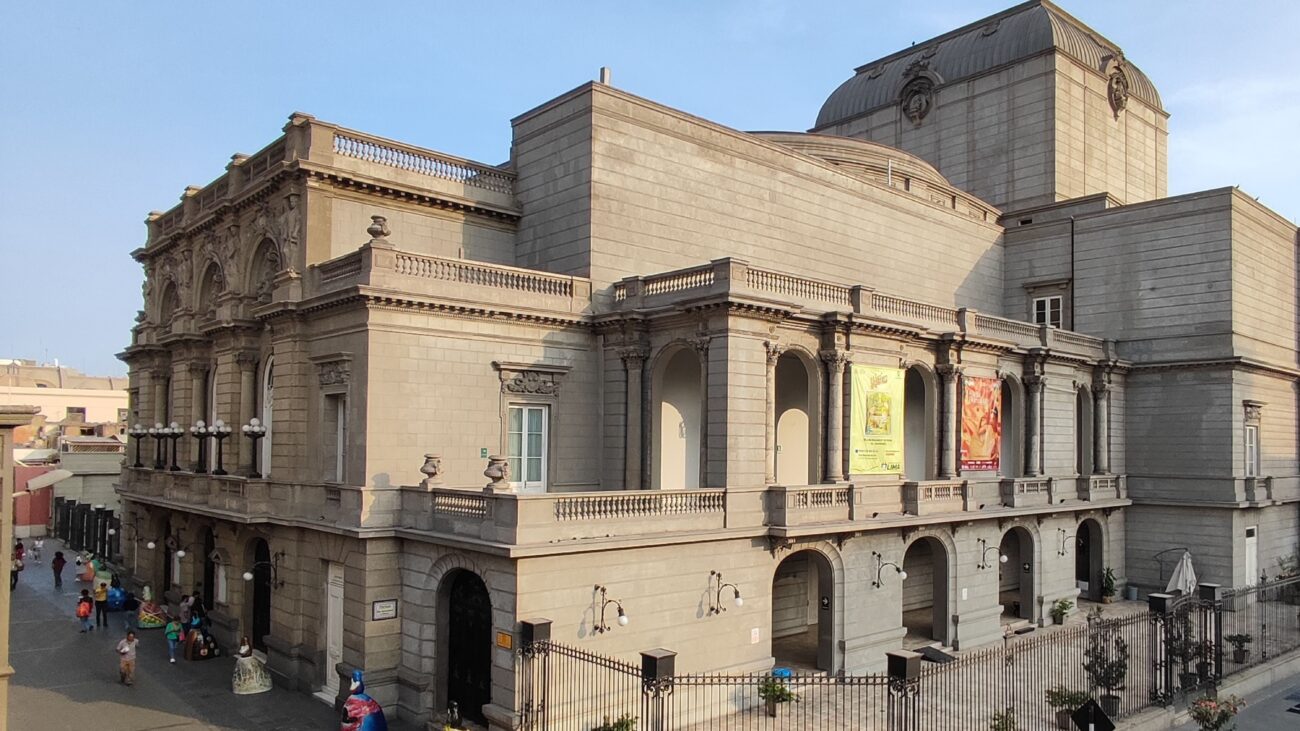
On the evening of 28 July 1920, as Peru prepared to celebrate the centenary of its independence, the doors of an imposing building on Calle Ica opened for the first time. More than simply a theatre in Lima’s historic centre, it was the realisation of the vision of designer, builder and politician Manuel María Forero, who sought to provide the Peruvian capital with a venue worthy of Europe’s great opera houses.
Located in the historic heart of Lima, a UNESCO World Heritage Site, the Teatro Municipal de Lima was originally inaugurated as the Teatro Forero in honour of one of the driving forces behind its construction and opening. In 1929 it was acquired by the municipality and became a cornerstone of both municipal and national cultural policy.
With seating for approximately 1,181 audience members, resident artistic ensembles and an architectural style that reflects the great opera houses built across Latin America during the nineteenth and twentieth centuries, the theatre is today a centre for artistic production and heritage management.
From Forero’s Vision to Municipal Management
Unlike many Latin American theatres established in the nineteenth and early twentieth centuries through government initiatives, the origins of the Teatro Municipal de Lima were entirely private. Manuel María Forero, Peru’s consul in Iquique, Chile, between 1908 and 1911 and a passionate supporter of the performing arts, invested his own capital in building a venue capable of accommodating the growing audiences attending touring opera companies.
Peruvian architect and engineer Alfredo Viale designed the exterior of the building, drawing inspiration from the traditions of Neoclassicism and Italian Baroque architecture.
The original structure featured a horseshoe-shaped auditorium in the Italian style, designed to optimise sightlines and the projection of natural sound, a critical requirement for grand opera at the time. The inauguration of the Teatro Forero on 28 July 1920 was a major event. The Brecale Opera Company, led by superstar tenor Enrico Caruso, performed during the opening season, although Caruso himself never appeared on the Lima stage despite being expected to do so.
At the opening, Manuel María Forero declared: “I have wished to give myself the pleasure of building a great theatre dedicated not only to the city of Lima, but to all of Peru.”
High maintenance costs and economic difficulties eventually led the Peruvian State, through the Municipality of Lima, to acquire the building in 1929. From that moment, the Teatro Forero officially became the Teatro Municipal and assumed its role as one of the city’s principal cultural venues.
Throughout the 1930s and 1940s, the theatre established itself as an essential stop for the major opera companies travelling from Europe to the southern reaches of the continent. Its strategic location in central Lima made it the epicentre of social and artistic life, hosting not only opera performances but also state banquets and civic ceremonies.
Marble, Crystal and a Box for Widows
The architecture of the Teatro Municipal de Lima is a striking expression of monumental Neoclassicism. Its façade, adorned with busts of Beethoven, Wagner and Liszt, foreshadows the splendour of its interiors, including the Foyer or Salón Dorado, decorated with gold leaf, Carrara marble and Murano crystal in a style reminiscent of eighteenth-century French palaces.
The main auditorium contains three levels of boxes, a stalls section and an upper gallery. The ceiling, decorated with allegorical paintings and a magnificent crystal chandelier, was meticulously reconstructed following the 1998 fire, respecting Viale’s original designs while incorporating modern lighting and fire-safety systems.
The auditorium still preserves the historic Palco de las Viudas (Widows’ Box), with 25 arches from which widowed women once attended performances, as well as twelve caryatids, sculpted female figures serving as architectural supports whose origins can be traced back to a myth from the Peloponnesian War.
Following its comprehensive refurbishment in 2010, the theatre’s stage house was equipped with an automated stage machinery system and an orchestra pit capable of accommodating more than 80 musicians, enabling productions ranging from Wagnerian Romanticism to technically demanding contemporary works.
The Tragedy of 1998
On 2 June 1998, during rehearsals for an awards ceremony, a short circuit on stage triggered a catastrophic fire. Within hours, the flames had destroyed the stage, the ceiling of the main auditorium, much of the box seating and severely damaged the structure of the Salón Dorado.
The loss was considered a national tragedy. For twelve years, the theatre remained silent, its walls blackened by smoke. The reconstruction completed in 2010 was far more than a cosmetic restoration. Extensive structural engineering work reinforced the building against earthquakes, while a major technological upgrade introduced state-of-the-art acoustic systems.
The theatre reopened on 11 October 2010, fully restored and renewed, with a performance of La hija del faraón by the Ballet Municipal de Lima. Prior to the performance, the city’s symphony orchestra played the national anthem and El cóndor pasa by Peruvian composer Daniel Alomía Robles.
From the Universal Repertoire to Inca Drama
Today, the Teatro Municipal de Lima is home to the Ballet Municipal de Lima, founded in 1983 and directed by Lucy Telge. The company has trained generations of Peruvian dancers who now perform with international ensembles. Its annual seasons regularly feature classics such as El Lago de los Cisnes, Don Quijote and El Cascanueces, and have welcomed internationally renowned principal dancers including Stanislav Boukharaev, Fernando Bujones, Jorge Esquivel, Iván Korneyev and Dimitri Rykhlov.
The Teatro Municipal Symphony Orchestra is another of the institution’s resident ensembles. Currently conducted by Italian maestro Matteo Pagliari, it performs regularly in both symphonic concerts and opera productions.
The stage of the Teatro Municipal de Lima has hosted many of the leading figures of twentieth- and twenty-first-century performing arts. In its early years, it welcomed legendary Russian ballerina Anna Pavlova, while Peruvian tenor Alejandro Granda, one of the favourites of Milan’s La Scala during the 1930s, appeared frequently at the venue.
More recently, the theatre has hosted performances by tenor Juan Diego Flórez, who also leads Sinfonía por el Perú, a social transformation project through music that has likewise appeared at the theatre.
Opera singers such as Jonathan Tetelman and Nadine Sierra have featured in its programming, which has also embraced Spanish classical theatre, Peruvian música criolla and contemporary dance productions.
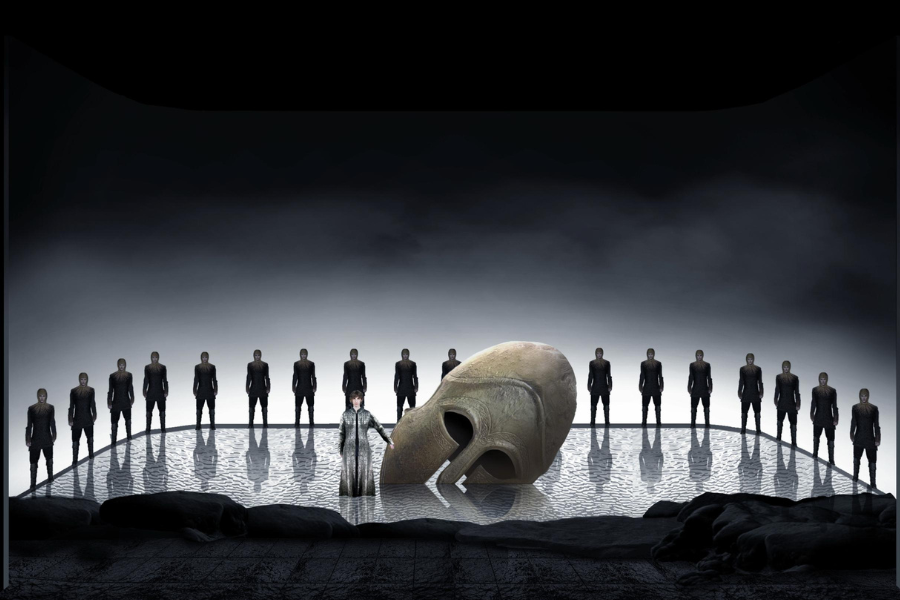
During its 2025 Season, the theatre presented major works from the international operatic repertoire, including La traviata (Verdi), Carmen (Bizet) and the zarzuela La tabernera del puerto (Sorozábal). In November of that year, it staged Ollanta by Peruvian composer José María Valle Riestra.
Premiered in Lima in 1900 and revived in a revised version in 1920, Ollanta is based on the colonial Quechua drama Ollantay. It tells the story of the forbidden love between an Inca general of humble origins and Cusi Coyllur, daughter of the Inca Pachacútec, who rejects him because he is not of royal blood, setting in motion a tale of rebellion, betrayal and a tragic Shakespearean ending.
The Teatro Municipal de Lima production featured stage direction by Jean Pierre Gamarra, set and costume design by Lorenzo Albani, and musical direction by Matteo Pagliari.
In June 2026, the Teatro Municipal de Lima will become the epicentre of Ibero-American opera as host of the 19th Annual Conference of Ópera Latinoamérica (OLA), welcoming hundreds of representatives from opera houses, festivals and opera companies across the network.