
Palau de les Arts Reina Sofía: Discovering the Arts
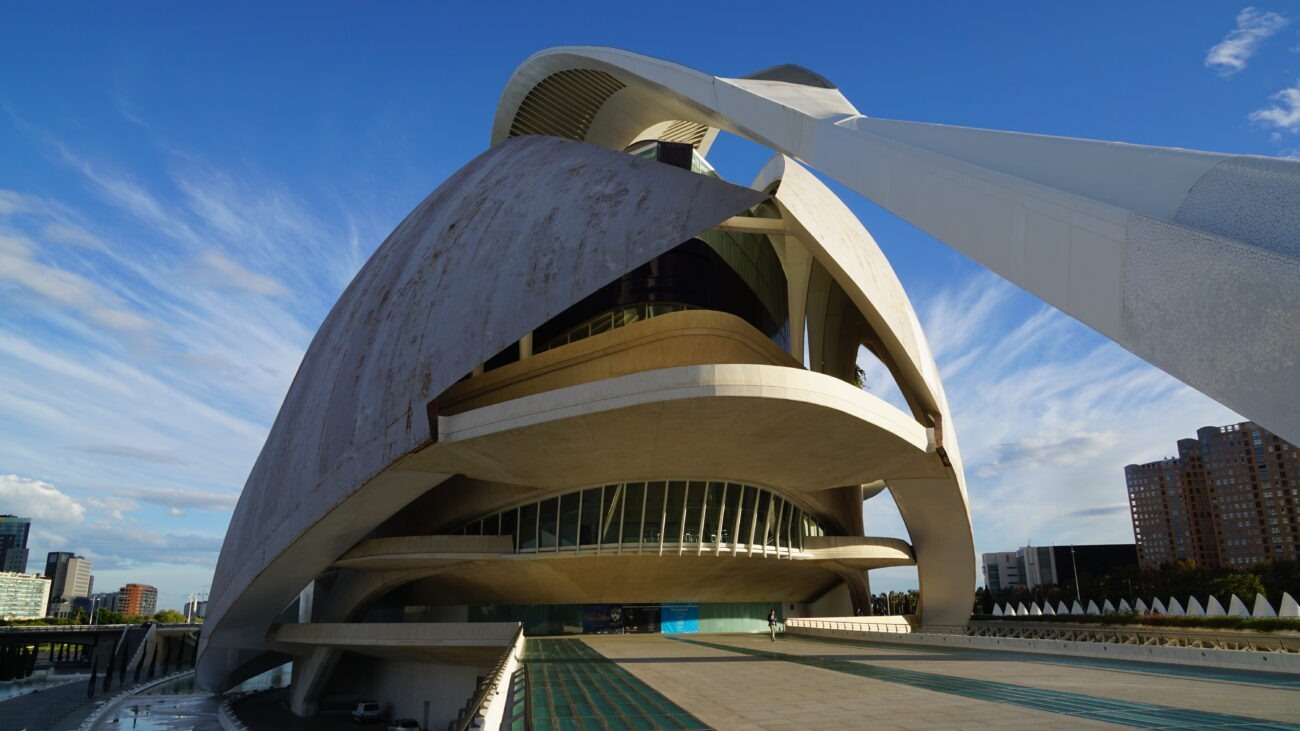
The Palau de les Arts Reina Sofía is Valencia’s major opera house and performing arts centre. Designed by Santiago Calatrava, it forms part of the complex known as the City of Arts and Sciences. It was inaugurated on 8 October 2005 by Queen Sofía and has since hosted opera and music performances. It is also the home of the Orquestra de la Comunitat Valenciana (OCV) and the Cor de la Generalitat Valenciana, and it promotes projects committed to education, sustainability, and engagement with diverse local communities..
The Palau de les Arts Reina Sofía officially opened its doors on 8 October 2005, as part of the celebrations for the Day of the Valencian Community. Its creation marked one of the final milestones of the ambitious City of Arts and Sciences, the neo-futuristic cultural and scientific complex designed by Valencian architect Santiago Calatrava, which sought to position Valencia as an international cultural and tourist reference point.
The idea of providing the city with a large-scale opera house emerged in the 1990s, promoted by the Generalitat Valenciana under the presidency of Eduardo Zaplana. The decision aimed to establish a lyric theatre capable of hosting major international productions.
The inaugural official season began in October 2006 with Beethoven’s Fidelio, conducted by Maestro Zubin Mehta and featuring Waltraud Meier, Matti Salminen and Peter Seiffert. That same year, conductor Lorin Maazel joined the newly opened theatre’s artistic team as the first Music Director of the Orquestra de la Comunitat Valenciana (OCV), created specifically for the venue. In its early years, the Palau experienced a period of significant artistic dynamism, particularly with the creation of the Festival del Mediterrani (2007), led by Mehta and Helga Schmidt (1941–2019), who also served as the theatre’s first Artistic Director.
Among its most notable milestones, the Palau de les Arts has hosted complete performances of Wagner’s Der Ring des Nibelungen, international tours by its orchestra, world premieres of contemporary operas, and the consolidation of its artistic training centre, the Centre de Perfeccionament (Opera Studio of the Palau de les Arts).
In recent years, the theatre has been led by a renewed management team, including Jesús Iglesias Noriega as Artistic Director since 2017 and Jorge Culla as General Director since 2021. Its focus has been on expanding audiences, strengthening international partnerships, and reinforcing its commitment to sustainability, education, and access to opera.
Neofuturism by the sea
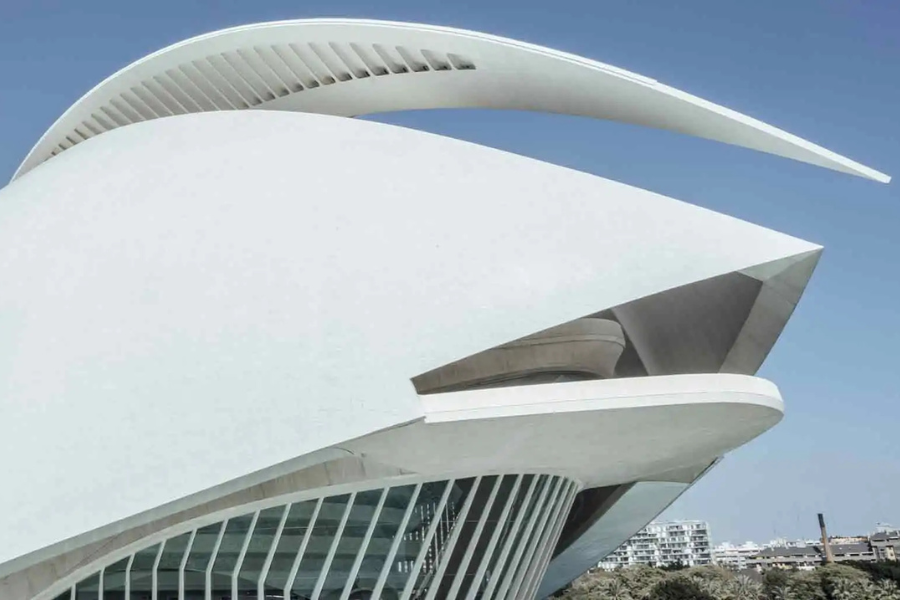
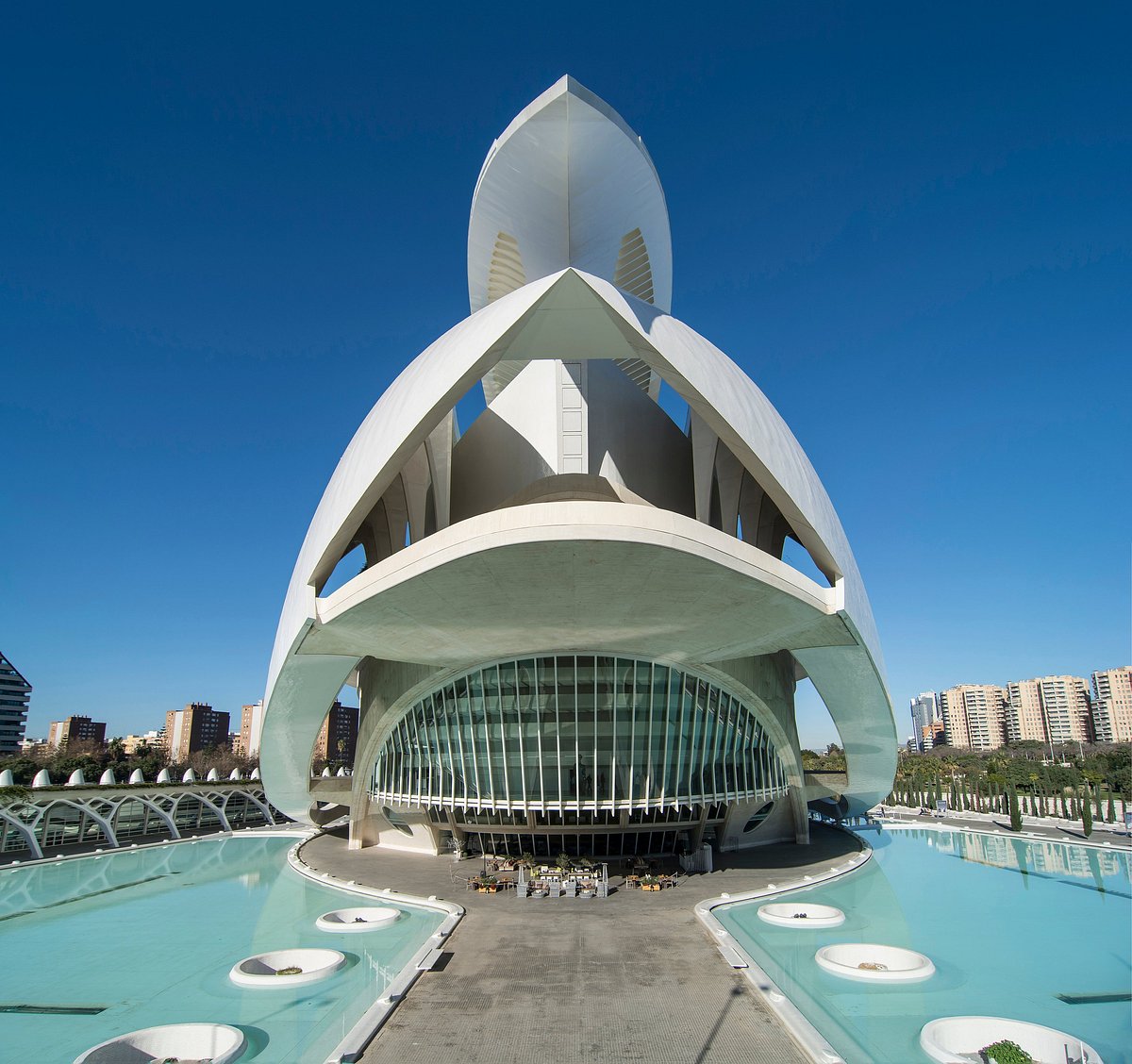
Designed by architect Santiago Calatrava, the Palau de les Arts Reina Sofía is one of the most iconic structures within Valencia’s City of Arts and Sciences complex.
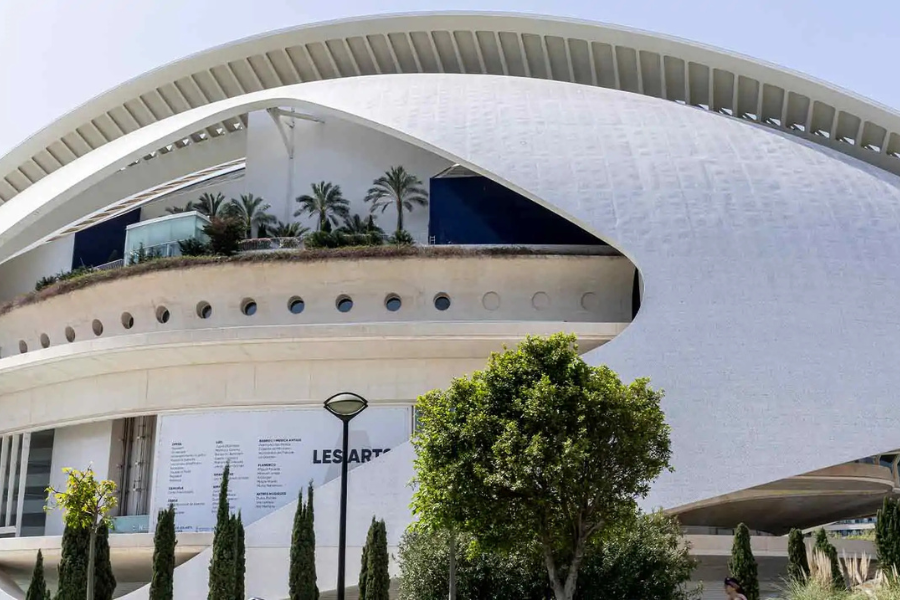
Its futuristic silhouette, clad in white trencadís (a traditional Catalan and Valencian ceramic technique), resembles either a helmet or a spacecraft and has been described as an example of so-called “neo-futurist architecture”.
With more than 40,000 square metres of built area and a total height of 75 metres, the building houses four main performance spaces for opera, music, ballet, and theatre: the Main Hall, the Auditorium, the Teatre Martín i Soler, and the Aula Magistral. This variety of venues allows for flexible programming, ranging from large-scale opera productions to chamber recitals, symphonic music, contemporary dance, and multidisciplinary performances.
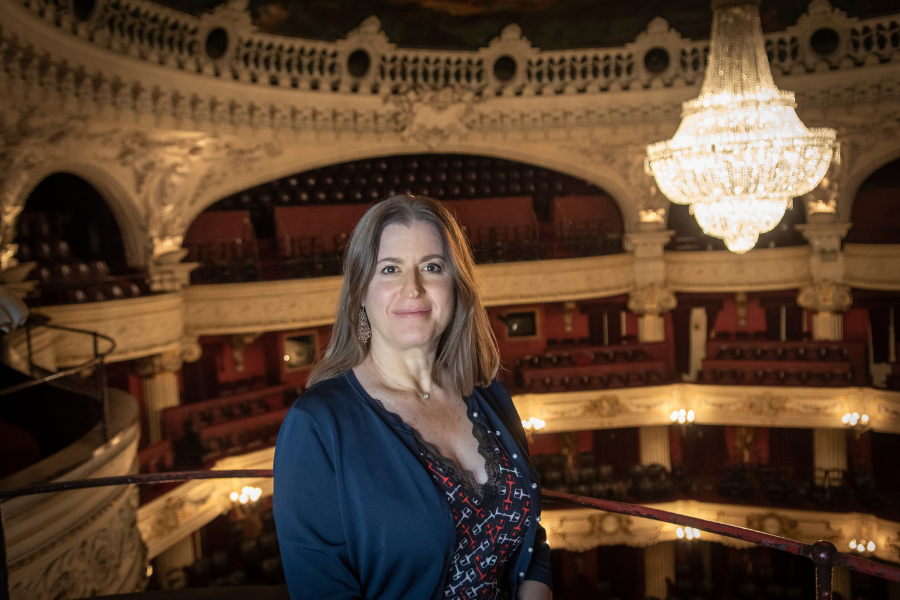
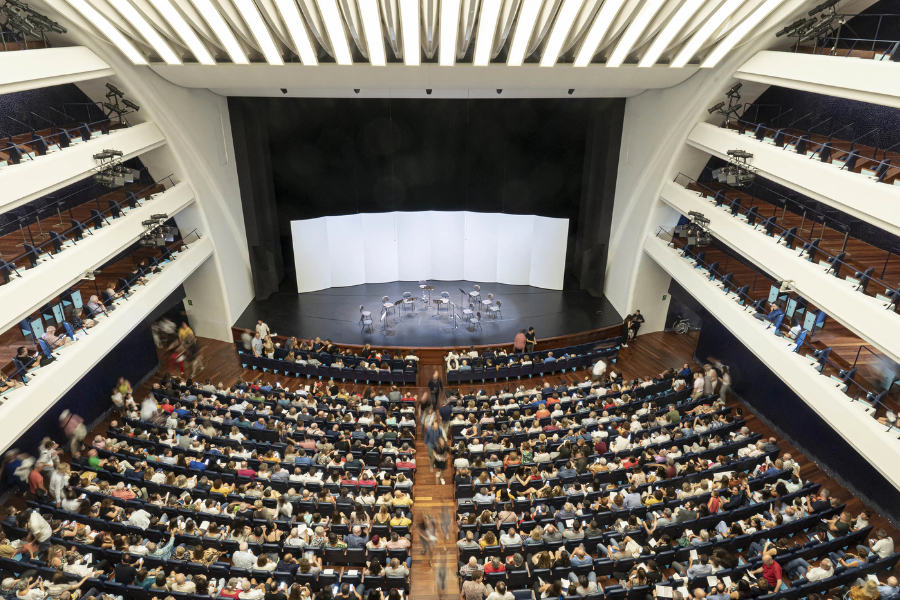
The Main Hall, with a seating capacity of 1,412, is the flagship space of Santiago Calatrava’s building. It hosts opera and zarzuela performances, dance productions, Lied cycles and Grandes Voces recitals, as well as chamber orchestra concerts.
It features a large stalls area and four tiers of horseshoe-shaped balconies. The hall is equipped with state-of-the-art stage technology, enabling a wide range of performances and events to be staged on its vast stage.
A beacon for new audiences and artists
The Palau de les Arts has also embarked on a series of initiatives aimed at broadening access to culture and encouraging civic participation. Among these, the Les Arts Volant project stands out: a touring company that brings opera productions to municipalities across the Valencian Community.
Created in collaboration with the Generalitat’s Department of Culture, the Diputació de València, and the City Council of Valencia, the aim of Les Arts Volant is “to bring opera to every corner of our territory, especially to towns with limited musical activity or where it would be difficult to stage a performance due to a lack of technical resources or suitable facilities.” The company therefore travels in a lorry to present free opera performances in squares, cultural centres, markets, and open-air spaces in dozens of towns across the region.
In a new tour between June and July 2025, the project will present La Ventafocs, a Valencian-language adaptation of Pauline Viardot’s opera Cendrillon, in a production directed by Joan Font, director, actor, and founder of the Comediants theatre company.
On the other hand, Les Arts és Educació is an educational programme that includes school visits, workshops, educational performances for children and teenagers, and training for teachers. Some of the programme’s recent projects include Discover the OCV, which introduces the components of the Orquestra de la Comunitat Valenciana, and Build Your Opera, a tutorial aimed at children and young people to become stage directors and design their own artistic space.
Another key pillar is Les Arts és Inclusió, which promotes activities for people with functional diversity, older adults, and socially vulnerable groups. This programme works in collaboration with vocational centres, social associations, and hospitals, and has developed initiatives such as accessible opera performances, shows with audio description and sign language, and participatory creation projects. In the 2024–2025 season, the theatre offered accessible opera performances for people with visual and hearing impairments in three productions: Il trovatore (G. Verdi), Dialogues des Carmélites (F. Poulenc), and Der fliegende Holländer (R. Wagner).
In the field of artistic mediation, Les Arts has consolidated programmes such as artist meet-and-greets, pre-performance talks, open rehearsals, thematic guided tours, and co-creation projects with local communities. The institution has also embraced digital transformation through multimedia content, live streaming, and social media outreach campaigns, particularly aimed at younger audiences.
“It is important to bring music and the performing arts in general to all kinds of audiences, especially those who are more limited, whether due to lack of financial resources or social or geographical distance,” said Jorge Culla, General Director of Les Arts, in an interview published by OLA in 2021.
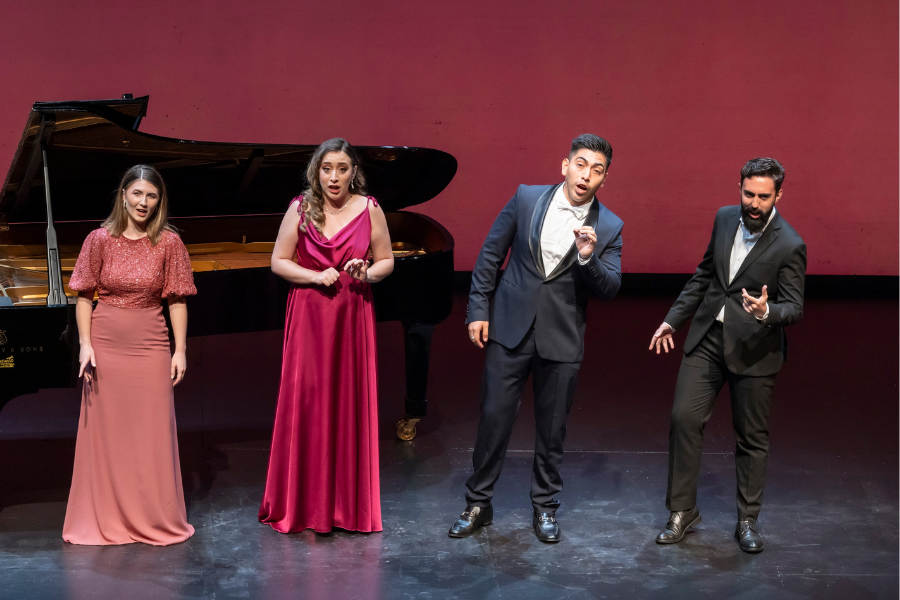
The Centre de Perfeccionament also plays a key role, currently with soprano María Bayo serving as artistic advisor. This initiative aims to provide high-level professional training for young singers and musicians from Spain, the European Union, and the rest of the world; to systematically prepare opera singers both artistically and structurally; and to maximise their successful integration into the professional opera world.
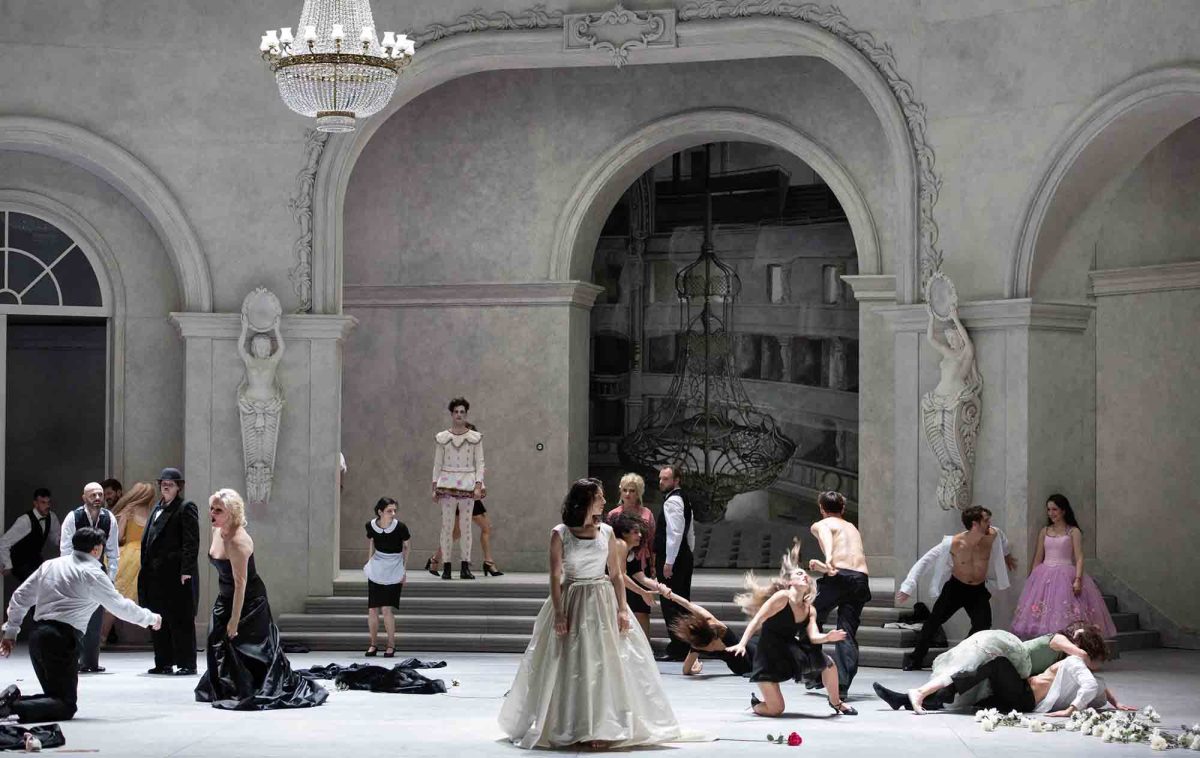
Returning to the programming, in recent years the classical repertoire has coexisted with new productions such as Christof Loy’s staging of Rusalka in the 2023–2024 season or, more recently, the double bill of L’heure espagnole and Gianni Schicchi directed by Moshe Leiser and Patrice Caurier in the 2024–2025 season.
Less frequently performed titles have also been included, such as the concert version of Handel’s Tamerlano presented in the most recent season, as well as world premieres, including the one scheduled for the 2025–2026 season with Enemigo del pueblo, an opera by Valencian composer Francisco Coll.
In 2025, the year marking the 20th anniversary of the institution, the Palau de les Arts Reina Sofía has already announced a season that will open with Faust (C. Gounod), staged by Johannes Erath. Other directors presenting new productions in the upcoming season include Valentina Carrasco (Luisa Miller by G. Verdi) and Àlex Rigola (Enemigo del pueblo by F. Coll), alongside new interpretations by Damiano Michieletto, Àlex Ollé, and Laurent Pelly.