
The Story Theatres Tell Us | Opinion piece in Ópera Actual magazine
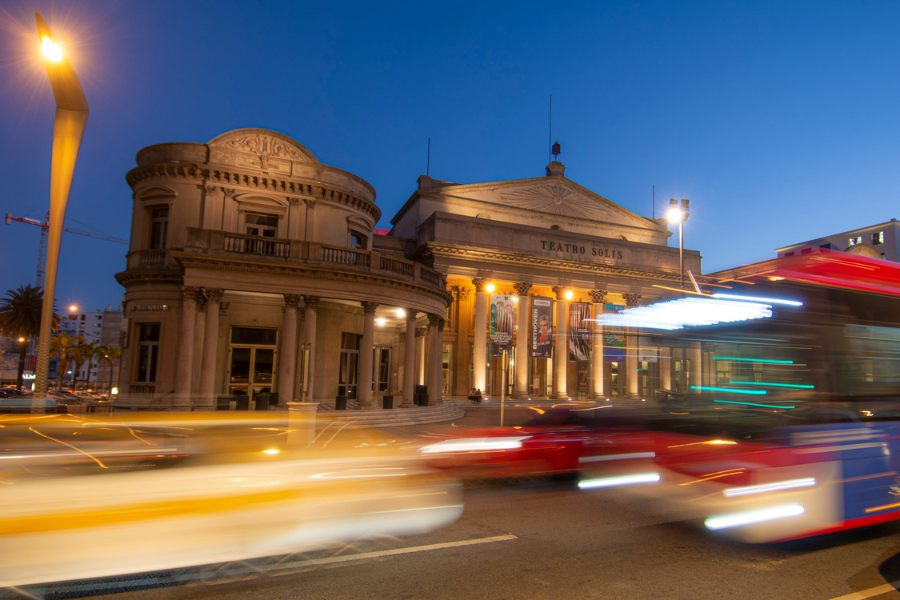
In her new opinion piece for Ópera Actual, Paulina Ricciardi Mondino, Executive Director of Ópera Latinoamérica, reflects on the role theatres play in shaping Latin American national identities—ranging from Montevideo’s Teatro Solís, which celebrates its 170th anniversary this year, to the major cultural venues of the 21st century. “Today, just as they did 170 years ago, theaters continue to embody both local and global identity through music and the performing arts,” Paulina writes.
By Paulina Ricciardi Mondino, Executive Director of Ópera Latinoamérica
Featured photo: Santiago Bouzas
This year marks the 170th anniversary of South America’s oldest theatre: Teatro Solís in Montevideo. Inaugurated on Uruguay’s Independence Day—August 25, 1856—it has served as a stage not only for music and the performing arts but also for the symbolic construction of the country, reflecting from its very inception a nation’s aspiration to develop in dialogue with the rest of the world.
Similarly, the history of many Latin American countries is closely intertwined with their cultural infrastructure. The construction of theatres reflects the surge of European migration to the continent during the 19th century, which brought with it artistic repertoires as well as Italian and French architectural models for grand national theatres. El Teatro Solís, Teatro Municipal in Santiago (1867), and Teatro Amazonas (1896) are prime examples of this era—a tradition continued in the early 20th century by venues such as the Colón in Buenos Aires (1908), the Municipal in São Paulo (1911), the Municipal in Lima (1920), and the Palacio de Bellas Artes in Mexico (1934)
The construction of these theatres accompanied—and often drove—processes of urban modernization that included street lighting, paving, and transportation improvements, alongside other public works that redefined public space. Materials imported from Europe signified not only a particular aesthetic but also economic prosperity and the region’s integration into global networks.
During the 20th century, these spaces established themselves as settings for historic and cultural milestones, playing an active role in shaping national identities. For instance, in 1922, the Theatro Municipal in São Paulo hosted the Modern Art Week, which gave rise to Brazilian modernism. Meanwhile, in 1949, the Teatro Municipal in Santiago served as the venue for the enactment of the law granting women the right to vote in Chile.
The second half of the 20th century—and especially the 21st century—brought new waves of theatre infrastructure reflecting different values. Teatro Teresa Carreño, Venezuela (1983) moved away from marble in favor of concrete, featuring a design that democratizes participation through open halls that ensure excellent visibility and acoustics for all sections of the audience. Following this same trajectory—led by local architects, each with their own distinctive style—are theatres such as the Metropolitano in Medellín (1987), the Mayor Julio Mario Santo Domingo, Bogotá (2010), Gran Teatro Nacional in Peru (2012), Bicentenario in San Juan in Argentina (2016), and Teatro Biobío in Chile (2018).
Today, just as they did 170 years ago, theatres continue to embody both local and global identities through music and the performing arts; they stand as landmarks that shape and enhance the urban fabric of cities; and, above all, they are gathering places that reinforce the collective construction of our history by fostering a dialogue between the past, the present, and the future.