
Breaking Glass Ceilings | Opinion Column in Ópera Actual
In a new column published in the latest issue of Ópera Actual, our executive director, Paulina Ricciardi, addresses the challenges of gender equity and female participation in cultural organisations. “Within OLA member organisations, parity is observed at the level of general directorships and boards, but glass ceilings persist in the core areas: the artistic and the technical. The good news is that, according to a survey in which 22 OLA members participated, 60% of organisations have gender equity policies, protocols, or initiatives in place,” she notes.
By Paulina Ricciardi Mondino, Executive Director of Ópera Latinoamérica (OLA)
The glass ceilings of theatres have begun to crack and, in recent years, women have been reaching leadership positions. We observed this at Ópera Latinoamérica (OLA) in 2022, when more than 50% of OLA member organisations were led by women, which led us to foster an agenda to build networks, understand professional trajectories, and strengthen them.
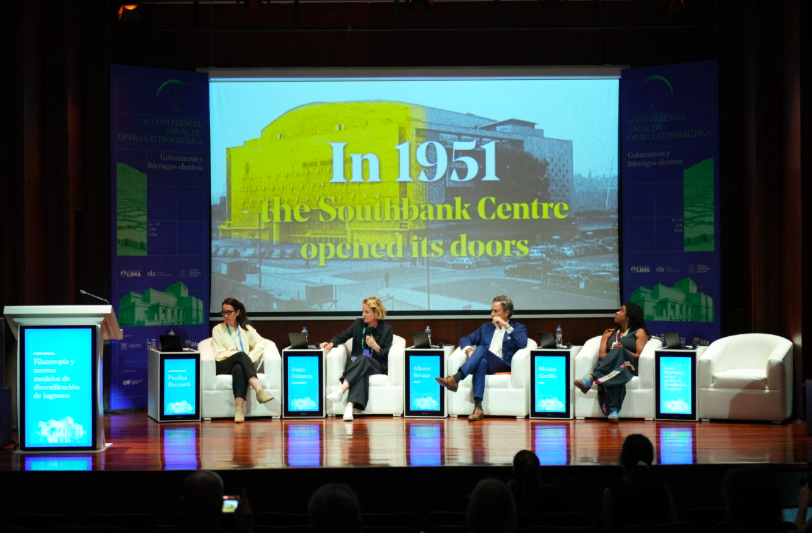
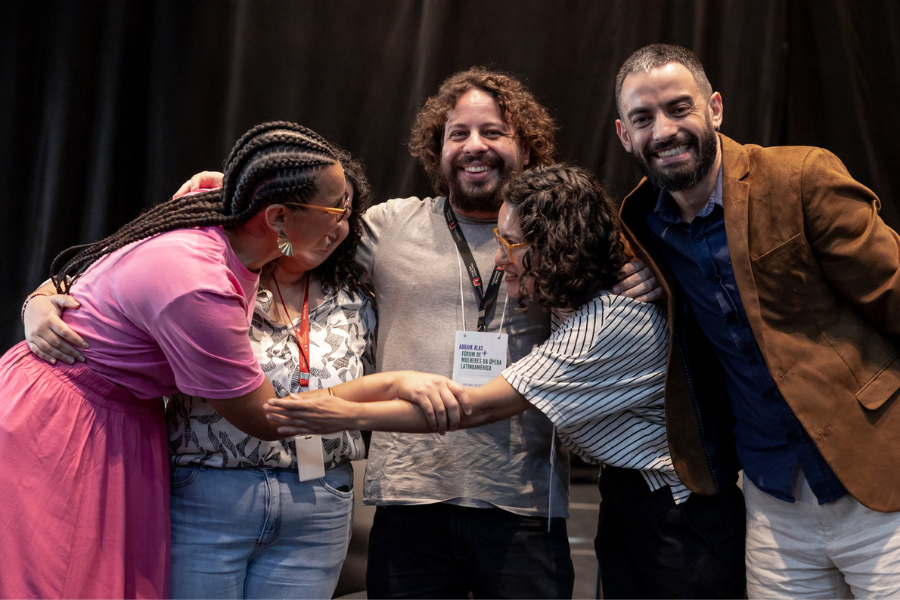
2025 was particularly active in this area: at the annual conference at the Palau de les Arts we held the third Women’s Forum; we hosted the Abram Alas gathering at the Theatro Municipal de São Paulo; and we ran the first OLA Women’s Mentorship Programme, in which more than 50 professionals from 12 countries took part. Yet not everything is rosy, and Women’s Month offers an opportunity to reflect on the challenges that remain.
According to the IDB (2023), although women’s participation in culture is higher than in agriculture or industry, gender equality challenges persist. Within OLA member organisations, parity is observed at the level of general directorships and boards, but glass ceilings persist in the core areas: the artistic and the technical. It bears recalling that it was only nearly 100 years ago, in 1930, that Antonia Brico became the first woman to conduct an orchestra — seven decades after the first female doctor. The good news is that, according to a survey in which 22 OLA members participated, 60% of organisations have gender equity policies, protocols, or initiatives in place.
One of the most significant gaps is the presence of works created by women. In another OLA survey, answered by 18 members, only 12% of operas programmed in the 2024 season were by women — whilst at the other end of the spectrum, 38% of choreographies bore a female signature. At the global level, according to UNESCO, only 5% of music programmed by orchestras is composed by women. The goal is not to achieve parity — centuries of a canon built around male creators make that extremely difficult — but rather to stimulate the creation of work by women artists, alongside the programming of works by female creators from previous centuries. In that spirit, 53% of OLA theatres are already integrating a gender perspective into their programming.
The inflection point lies in a cultural shift within organisations, one that encompasses all teams, so that this vision endures over time. At OLA, for instance, we transformed the Women’s Forum into a mixed space, where we found genuine interest on the part of male directors — strategic allies in this agenda — in advancing towards gender equity.
Is this merely a symbolic matter? By no means. According to the IMF, the GDP of emerging and developing countries could increase by nearly 8% if the gender gap in the labour market is narrowed. Breaking glass ceilings is, therefore, a task for everyone.