
The Challenge of Inhabiting Uncertainty | Opinion Column in Ópera Actual
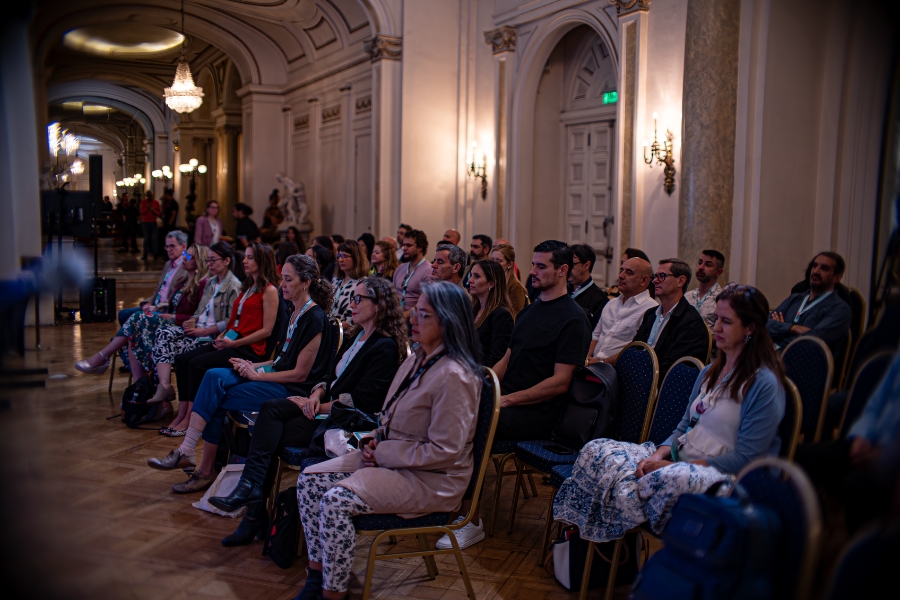
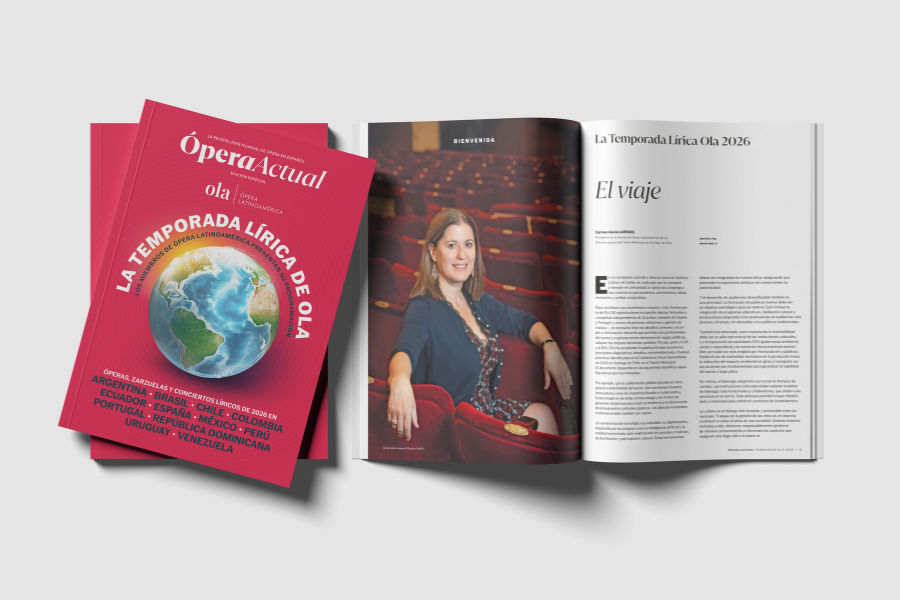
In a new column published in Ópera Actual, our executive director, Paulina Ricciardi, addresses the human factor as a guarantor of sustainability in organisations, particularly in the creative industries. “That is one of the purposes of the Ópera Latinoamérica Annual Conferences: to offer three days of pause so that the leaders of the theatres, festivals, and companies that are members of the network can draw on new perspectives and reflect collectively on the future we are paving for those who come after us,” Paulina writes, also previewing some of the themes that will define the 19th OLA Annual Conference in June.
When did you last stop to think about how what we experience as a society influences your daily routine? Have you reflected on the impact of AI on everyday life, or on how social media shapes your perception of the world? Given the daily demands placed on us and the volume of information we receive every minute, the answer is probably “a very long time ago.” Paradoxically, in a hyperconnected world, we seem more disconnected than ever — from ourselves, from our surroundings, and from one another.
That is one of the purposes of the Ópera Latinoamérica Annual Conferences: to offer three days of pause so that the leaders of the theatres, festivals, and companies that are members of the network can draw on new perspectives and reflect collectively on the future we are paving for those who come after us. In June, under the title Effective Governance and Leadership, we will gather at the Teatro Municipal de Lima to focus the conversation on people.
A defining feature of our times is the accelerated pace of change, driven by technology and deepened by climate, health, economic, social, and geopolitical crises. In the face of this landscape, theatres, companies, and festivals need to strengthen their capacity for adaptation, resilience, and flexibility in the face of increasingly uncertain contexts. In this challenge, leadership becomes more relevant than ever, as it falls to leaders to guide human teams through growing complexity.
To do so effectively, a report by the World Economic Forum from December 2025 underscored the importance of prioritising human skills such as collaboration, critical thinking, and emotional intelligence. The 21st century calls for leaders who are deeply connected to the reality of their environment — grounded leaders — who possess self-awareness and defined purpose, who genuinely care about and connect with people, and who inspire their teams.
In this vein, researchers such as Adrián Nájera-Coto, from the University of Texas Rio Grande Valley in the United States, promote Inner Development Goals (IDGs), which foster the progressive cultivation of skills across five dimensions — being, thinking, relating, collaborating, and acting — as an indispensable prerequisite for generating sustainable external change from a place of inner awareness.
Cultural organisations are the spaces in which life is represented, given meaning, and questioned; they are refuges for sensory experiences that technology cannot replicate. Culture is the space in which humanity expresses itself in its fullest splendour, and we must therefore be the first to value those capacities that make us human. Paradoxically, in a world tending towards automation and AI, it is the human factor that guarantees the sustainability of organisations.