
Teatro Real Hosts 18 Young Artists for the Sixth Edition of “Crescendo”
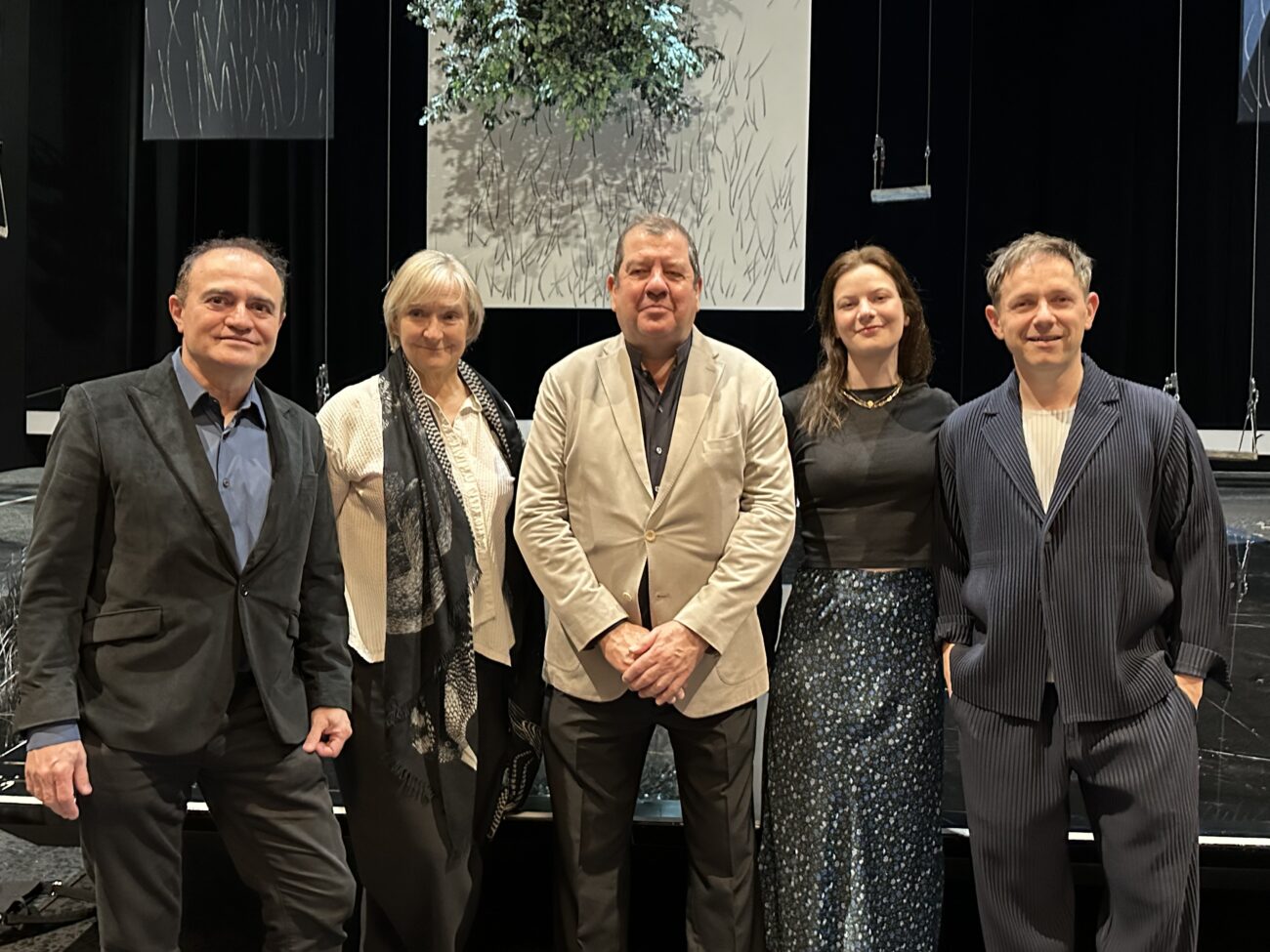
Between March 10 and 22, the Teatro Real will present six performances of a new production of A Midsummer Night’s Dream by Benjamin Britten. Ivor Bolton will be in charge of the musical direction, Deborah Warner will direct the stage, and Kim Brandstrup will handle the choreography.
Between March 10 and 22, the Teatro Real will present six performances of a new production of A Midsummer Night’s Dream by Benjamin Britten, which will later be staged at the co-producing theaters: the Royal Ballet and Opera in London and the Teatro Maggio Musicale Fiorentino.
After the success of Billy Budd in 2017 and Peter Grimes in 2021, the Teatro Real reunites musical director Ivor Bolton and stage director Deborah Warner for a new Britten opera, which departs from the realistic dramas of their previous collaborations to explore the fantastical world of Shakespearean comedy, while nonetheless concealing significant psychological and even ontological questions.
Benjamin Britten (1913–1976) was commissioned to compose an opera for the opening of the renovated Jubilee Hall auditorium in Aldeburgh in 1960, with barely a year’s notice. Due to the tight timeframe, he decided to write the libretto himself—with the collaboration of his partner, tenor Peter Pears (1910–1986)—based on a well-known and admired literary work.
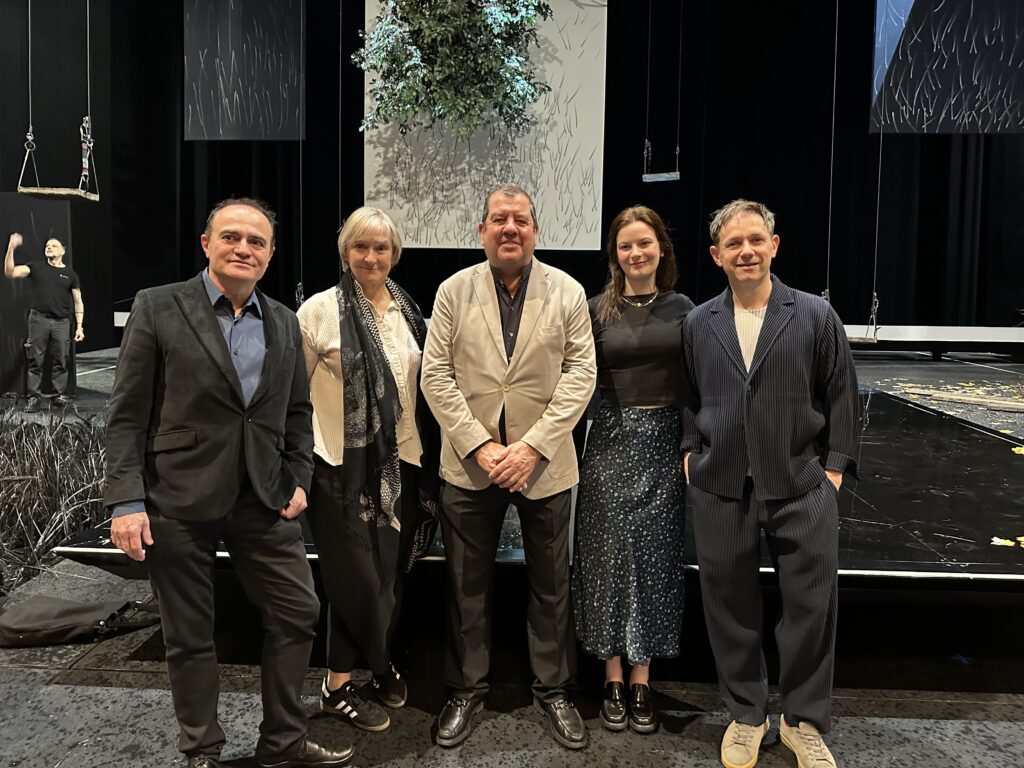
Foto: © Teatro Real
Within seven months, the score for A Midsummer Night’s Dream was completed, featuring an impeccable reduction and adaptation of the eponymous play by William Shakespeare (1564–1616). Britten preserved the essence of the plot as well as all the characters’ text, with the exception of a single line: “Compelling thee to marry with Demetrius.”
The decision to omit the first act of the original comedy, which takes place in the Athenian court, and to begin the opera directly in the enchanted forest—a refuge and meeting place for fairies, sprites, courtly lovers, and rustic craftsmen—highlights Britten’s preference for giving the opera a dreamlike, symbolic, supernatural, and even burlesque character. Its psychological undertone reflects on the illusory nature of love, the fleetingness of desire, the fragility of identity, the permeability between reality and fantasy, and the animal impulses that connect and unify us with nature.
In the magical world of the fairies—the unconscious, the irrational—everything is thrown into disarray when Oberon, their sovereign, jealous of Titania’s relationship with the young page who attends her, decides to take revenge by asking the mischievous Puck to give her a potion that will make her fall madly in love with the first person she sees upon waking. Puck’s mistake in administering the potion triggers chaos in the shadows of the forest on that summer night, during which two couples—Hermia and Lysander, Demetrius and Helena—flee the hypocrisy of courtly life, and a group of caricatured craftsmen amuse themselves by rehearsing the play Pyramus and Thisbe—a play within a play—to celebrate the wedding of Duke Theseus and Queen Hippolyta.
Musically, Britten created clearly distinct sonic worlds for the groups of Shakespearean characters. For the fairy realm, he uses ethereal timbres—harp, celesta, high strings, woodwinds, and children’s voices—along with glissandi, delicate harmonies, and suspended sonorities. The role of Oberon, written for countertenor, reinforces his strange, androgynous, and fantastical nature.
For the encounters and misunderstandings of the Athenian couples, Britten employs lyrical and intense lines, with surprising melodic and harmonic shifts that reflect emotional instability and disorder. For the amateur workers and comic characters, the music is direct and parodic, mocking both the sublimation of instincts and the conventions of nineteenth-century opera.
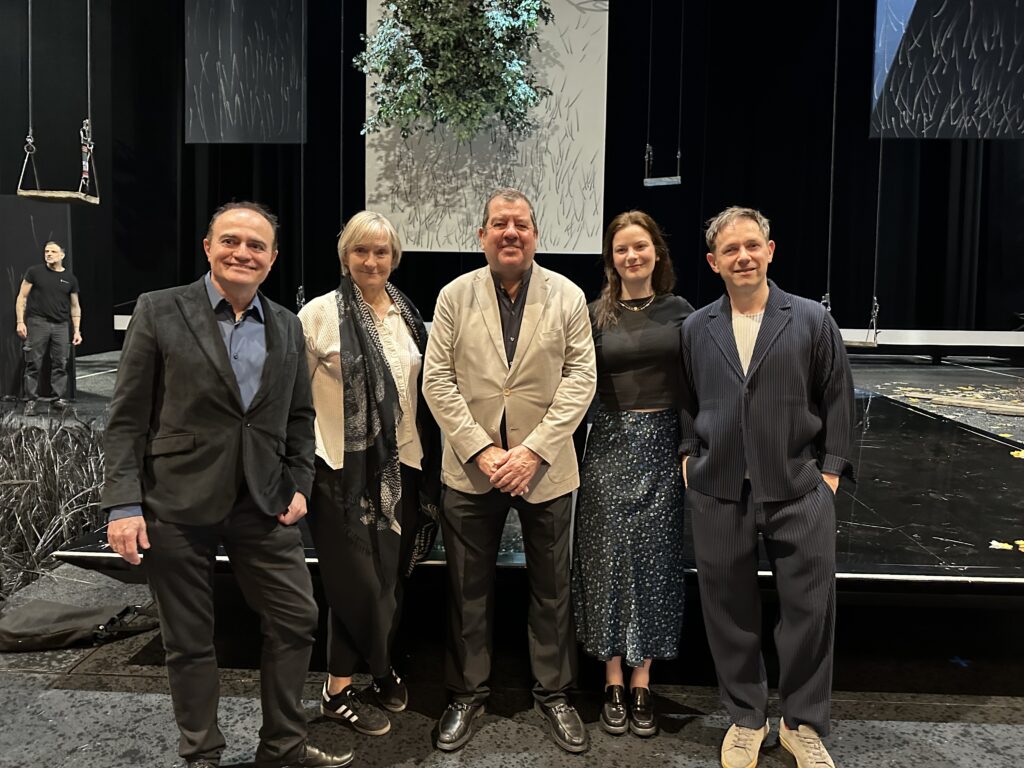
Deborah Warner enhances the mysterious, delirious, and grotesque atmosphere of the opera, creating a fantastical world in collaboration with set designer Christof Hetzer—who created the installation that serves as the conceptual framework of the plot—lighting designer Urs Schönebaum—who will reveal the secrets of the nocturnal forest—and costume designer Luis Filipe Carvalho—who designed outfits that clearly differentiate the groups inhabiting the night of chaos, frenzy, and freedom experienced by the characters.
To bring them to life, the Teatro Real features a chorus of outstanding singer-actors including Iestyn Davies (Oberon), Liv Redpath (Titania), Daniel Abelson (Puck), Thomas Oliemans (Theseus), Christine Rice (Hippolyta), Sam Furness (Lysander), Jacques Imbrailo (Demetrius), Simone McIntosh (Hermia), Jacquelyn Wagner (Helena), Clive Bayley (Bottom), Henry Waddington (Quince), Ru Charlesworth (Flute), Stephen Richardson (Snug), John Graham-Hall (Snout), and William Dazeley (Starveling). Joining them will be the children’s choir Pequeños Cantores de la ORCAM, trained by Ana González—who play an important role in the opera—and the Teatro Real’s resident orchestra, conducted by Ivor Bolton in the pit.
Benjamin Britten has held a privileged place in the Teatro Real’s programming since its reopening. In 1997, just two months after the reopening, Peter Grimes achieved great success in a production from the Théâtre de La Monnaie in Brussels, featuring its resident chorus and orchestra conducted by Antonio Pappano.
It was followed by A Midsummer Night’s Dream (2006), The Rape of Lucretia (2007), The Turn of the Screw (2010), Death in Venice (2014), Billy Budd (2017), Gloriana (2018), Peter Grimes (2021), and the children’s works The Little Sweep (2005, 2006, and 2007) and Noye’s Fludde (2008).
A Midsummer Night’s Dream* will return to the Teatro Real after twenty years to fill its stage with real and fantastical characters, joining together in a lively nocturnal masquerade—libertine, absurd, and grotesque—that, nonetheless, will change the dawns that follow: what really happened that night in the forest?