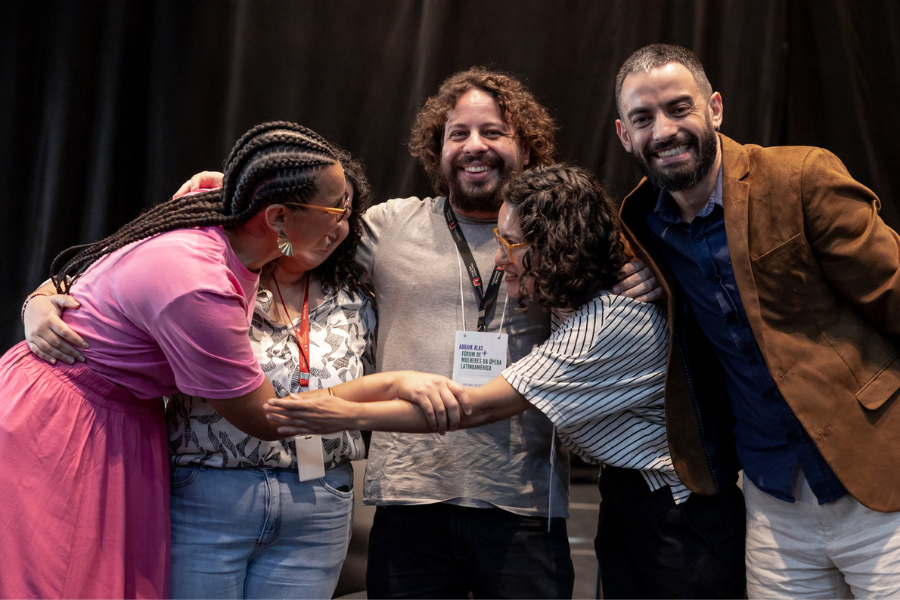

“A community of mutual support”: OLA concludes its Mentorship Program with the first generation of mentors and mentees.
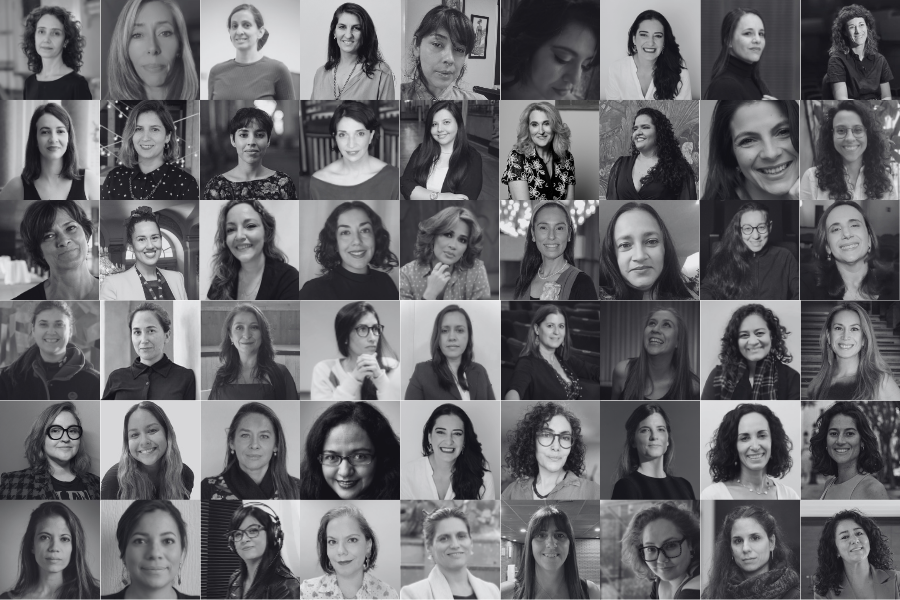
In the first edition of the OLA Women’s Forum Mentorship Program, more than 50 professionals from theaters, festivals, and companies from 12 Ibero-American countries participated. The unprecedented program ran between March and December 2025 and is already emerging as a key space for the training and professionalization of female leadership in the performing arts.
In the first edition of the OLA Women’s Forum Mentorship Program, more than 50 professionals from theaters, festivals, and companies across 12 Ibero-American countries participated. The unprecedented program ran from March to December 2025 and is already emerging as a key space for the training and professionalization of female leadership in the performing arts.
After ten months of collaborative work and exchange of experiences, Ópera Latinoamérica (OLA) concluded the first edition of the OLA Women’s Forum Mentorship Program. This initiative, which received advisory support from the Chilean organization Mujeres Empresarias in its initial stage, was created with the goal of supporting and strengthening the professional development of the women who are part of the OLA network.
The program provided a space for growth where prominent directors and leaders from Ibero-American theaters, festivals, and opera companies became mentors to professionals who are in the early or intermediate stages of their careers.
“OLA network initiatives are demonstrating that opera and the performing arts in Ibero-America are not only creative industries and cultural heritage, but also drivers of social and professional change. Through this program, we are putting into practice conversations we began at the first Women’s Forum in 2023 in Manaus, and shaping collaborative goals that benefit the women of today while paving the way for those to come,” says Paulina Ricciardi, Executive Director of OLA.
The first cohort consisted of 52 women: 23 mentors and 29 mentees (participants being guided). One of the pillars of the program was the geographic and professional diversity of the participants, who came from 12 countries in the region: Argentina, Brazil, Chile, Colombia, Ecuador, Spain, Mexico, Peru, Portugal, the Dominican Republic, Uruguay, and Venezuela.
The mentors and mentees belong to 17 performing arts institutions with varied trajectories, such as the Teatro Colón (Argentina), the Theatro Municipal de São Paulo (Brazil), the Teatro Municipal de Santiago (Chile), the Teatro Real (Spain), Cascais Ópera – Festival Internacional de Canto (Portugal), Sinfonía por el Perú (Peru), and the Auditorio Nacional Adela Reta del SODRE (Uruguay), among others. Their areas of specialization ranged from direction and production to museology, marketing, props, and partnership management.
“A turning point in my self-perception”
In the program’s evaluation, mentors stated that the process represented an “opportunity to give back” and a virtuous “intergenerational dialogue.”
“I feel that knowledge, when it is kept, withers, but when it is shared, it blossoms in others… Being a mentor is more than guiding; it is accompanying through attentive listening, through care, and through a passion for art,” highlighted one of the participating mentors.
For their part, the mentees emphasized the program’s impact on their self-perception, professional confidence, and the creation of a community of mutual support.
“My career felt stagnant since I became a mother. This mentorship touched such deep fibers that I ended up feeling inspired and with professional clarity about what I want and how I want it now that I am a mother,” shared one of the mentees.
Another participant added that “the program was a true turning point in my self-perception as a professional, which consequently had a positive impact on my environment.”
The Mentorship Program began in March 2025 with an open call for mentors. The selection process was carried out by an evaluation panel composed of Paulina Ricciardi (Executive Director of OLA), Nicole Forttes (Entrepreneurship Manager at Mujeres Empresarias), and Trinidad Zaldívar (expert in cultural affairs).
The selected mentors received virtual training to strengthen their mentoring and guidance tools. Later, in June, the call opened for mentees, who were matched with their mentors based on criteria such as professional affinity, institutional trajectory, and geographic diversity.
During the second half of 2025, the personalized mentoring and guidance sessions took place. In addition, in September, within the framework of the Abram Alas meeting at the Theatro Municipal de São Paulo, an in-person meeting of the OLA Women’s Forum was held, allowing some mentors and mentees to share a valuable physical space for reflection.
Given the success of this pilot edition, the program is projected to become a fundamental pillar of OLA. “I recognize the privilege it has been to work and learn from extraordinary women, and I hope to continue growing through the OLA network so that one day I may also become one of them,” reflected one of the graduates of this first cohort.